How to Play
The Rules of the Tavern
Runefall Rivals is a fast, chess-like collectible card battler. There is no mana or energy — you and your opponent alternate single-card moves, reacting to each other in real time, until one hero falls. Matches last 5–10 minutes.
The Basics
The goal is simple: reduce the enemy hero to 0 health. The first to do so wins.
The Move & React Flow
Cards resolve immediately, but strikes create a brief reaction window — this is the heart of the game.
- 1. Your move — play a cardOn your turn, play one card. Attacks, spells, and strikers that deal damage create a PENDING strike against the enemy.
- 2. Opponent reactsBefore the strike lands, the defender may react: play a Warden to soak it, a Reflect to turn it back on you, an Interrupt/Root to cancel your card, or take the hit.
- 3. Swift grants a bonus moveIf your card (or your chain) is Swift, you get another move immediately — strike again, set up, or counter.
- 4. Pass to BraceIf you can't or won't play, brace. You gain 2 shield and draw 1 card — then your move ends.
You may chain up to 3 consecutive Swift moves before initiative is forced to pass — so a single turn can explode into a multi-card combo.
Rounds, Brace, Cycle & Fatigue
A round is one normal move from each player. The round boundary matters.
Anatomy of a Card
Every card shares the same forged frame. Here is what each part means — using a real card from the set.

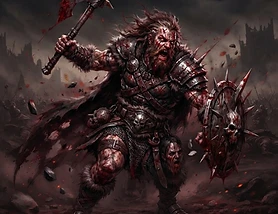
Deal 7 damage. Swift.
“He did not run. He arrived.”
Berserker's Charge — a real card from the Alpha set.
The outer band and set rune carry the card's rarity color — rarer cards are stronger and grant more champion tokens:
Card Types
Every card belongs to one of these types. Creatures are temporary — they do their job and leave the board.
A direct strike that deals damage to the enemy hero. Creates a pending strike the opponent may react to.
One-off magical effects: direct damage, afflictions, cleansing, plating-rust, and card draw.
A temporary attacker. Deals its strike damage, then leaves the board. Does not persist between moves.
A temporary defender. Played as a reaction to soak incoming damage, then leaves the board.
Utility plays: draw cards, buff your next strike, set up combos. Often Swift.
Cancel the enemy's last card outright. Limited by reaction fatigue — at most 2 cancel-reactions per round.
Cancel the enemy's last creature — even a blocking warden — or snare a Swift card: its effects still resolve, but its bonus move is negated. May be broken by a Break-Root. Harder to remove than an Interrupt.
Negates a Root that is targeting one of your cards, freeing your play — and its Swift bonus move — to resolve.
A reaction that turns an incoming strike back on its caster — they take the damage instead of you. Doesn't count toward the cancel-reaction limit.
Examples from the card pool:


Striker: 7 damage. Swift.


Warden: soak 3.


Gain 3 shield. Draw 1.


Deal 6. If chained after Ignite: deal 5. Ignite.


Interrupt: cancel the enemy's last card.


Root: cancel the enemy's last creature — or snare a Swift card: it still resolves, but its bonus move is negated. May be broken.


Break: negate a root that targets your card.


Afflict the enemy: 2 damage for 3 turns.


Reflect: the enemy's last strike is turned back on its caster.


Deal 7 damage. Heal for half the damage dealt (rounded down).
Combo Tags
Some cards carry a combo tag that changes how they play within a single move.
Forgework — the Iron Craft
The Iron Kingdom's signature mechanic: shields and the Brace move, built up by its Forgework spells and turned into value by its heroes.
Defenses
Incoming damage is reduced by your Shield first, then health.
Shield persists between moves until consumed by damage or stripped by Rust — but afflictions (DoT) are true damage and bypass it entirely. The rule of thumb: shield is uncapped but pierced by piercing strikes, and Rust strips it away.
Card Effects
The building blocks every card is made from.
Deals damage to the enemy hero (reduced by Shield).
A warden's soak — absorbs pending strike damage as a reaction.
Restores your health. Healing is uncapped — it can push you above your starting total.
Add cards to your hand (hand size caps at 7).
Damages the afflicted hero at the end of each round. True damage — bypasses Armor and Shield.
Removes all of your active afflictions.
Strips points from the enemy's shield — the counter to a stacked-up defense.
Some powerful cards cost your own health (e.g. Blood Pact, Ritual Scarring).
The 2nd+ Ignite card in a move-chain strikes for its escalated Ignite damage instead of its base damage.
Strike damage with lifesteal heals you for half the damage dealt, rounded down (e.g. Drain Life, Vampiric Touch).
Piercing strikes cut straight through Shield and go to work on health.
Icon Legend
A quick reference for every flat glyph you'll see across the tavern — and what each one means.
Interrupts, Roots, Break-Roots & Reflects
Cancel-reactions are powerful but limited.
Ultimate Tokens & Ultimates
Each hero collects faction tokens over the match — fill their ultimate meter (6 tokens) and consume them to unleash a game-swinging ultimate.
Factions & Ultimate Tokens
The factions of Runefall, each with its own playstyle — and the faction tokens its Champion cards grant toward your ultimate.
Brutal, relentless aggression. Champion cards grant Rage tokens toward your hero's ultimate.
Chain Ignite cards within a single move to escalate their damage. Champion cards grant Flame tokens toward your hero's ultimate.
Druidic healing and mighty creatures. Champion cards grant Growth tokens toward your hero's ultimate.
Corrupt cards trigger bonus effects when the enemy is hurt. Champion cards grant Blight tokens toward your hero's ultimate.
Forgework shields and stalwart defense. Champion cards grant Forge tokens toward your hero's ultimate.
Those who inscribe the runes that power all magic. Neutral cards can be played by any hero.
Multicolor Alliances: twenty legendary heroes across ten alliances each bind two factions — the Ashbound, the Bloodgrove, the Spellforge, the Rotgarden, and more. Their cards blend both parent colors, and each may build decks from either parent faction plus the alliance's own exclusive Epics and Legendaries.
Deckbuilding
You bring a 40-card deck built around your hero.
Only the five starter heroes come with a premade deck. Every other hero borrows a compatible faction starter deck — their own faction's, either parent faction's for alliance heroes, or any faction's for the First Runewright — or builds a deck from scratch.
When your deck runs out, your graveyard reshuffles into a new library. Healing across the set is deliberately scaled back, Bracing no longer restores life, and strike damage has been raised across the set — so attrition tips marathon matches toward the aggressor.
Game Modes
Three ways to play.
Ready to enter the tavern?
Pick your hero, build your deck, and put these rules into practice.